


Modern luxury residential architecture is defined entirely by the elimination of visual distractions. To preserve the monolithic continuity of book-matched marble slabs, Venetian plaster, or custom millwork wall panels, high-end interior designers routinely seek to eliminate “wall acne”—the cluster of standard plastic duplex outlets and switches that disrupt clean wall planes.
The pursuit of this minimalist aesthetic has made trimless, flush-mounted wiring devices a standard architectural specification. However, translating a minimal drawing into a compliant, physical reality inside a Manhattan penthouse introduces significant coordination and code-compliance challenges
Among available premium systems, the Bocci 22 Series presents a unique technical challenge. Successfully installing a Bocci 22 flush outlet under NYC electrical code parameters requires moving past baseline aesthetics and executing a precise, multi-trade installation sequence that satisfies municipal inspection teams.
Relevant references:
The Allure vs. The Reality of Trimless Wiring Devices
High-End Aesthetic Demands
The architectural desire for trimless devices is undeniable. Systems like Bocci 22, Trufig, and SeeLess replace traditional overlapping cover plates with a completely flush, trimless profile that sits co-planar with the surrounding wall finish. By utilizing specialized mud-in mounting plates, these systems reduce the visible presence of an electrical device to two minimal, circular barrel openings, allowing the material profile of the wall to remain the dominant visual feature.
The Regulatory Checkpoint: NEC Accessibility Mandates
While designers prioritize the surface presentation, the NYC Electrical Code Interpretation and Revision Committee focuses strictly on the infrastructure behind the drywall. The central conflict stems from the core requirement of electrical safety codes: all electrical junctions, splices, and terminal connections must remain fully accessible for maintenance and troubleshooting.
Because the local code updates reinforce strict interpretation guidelines for concealed wiring spaces, failing to coordinate accessibility requirements and installation details may result in inspection comments, corrective work, or approval delays. Inspectors typically require clear documentation demonstrating that electrical connections remain accessible for future servicing and maintenance.
When a standard utility box is permanently concealed behind finished surfaces, it may no longer satisfy accessibility requirements for electrical connections.
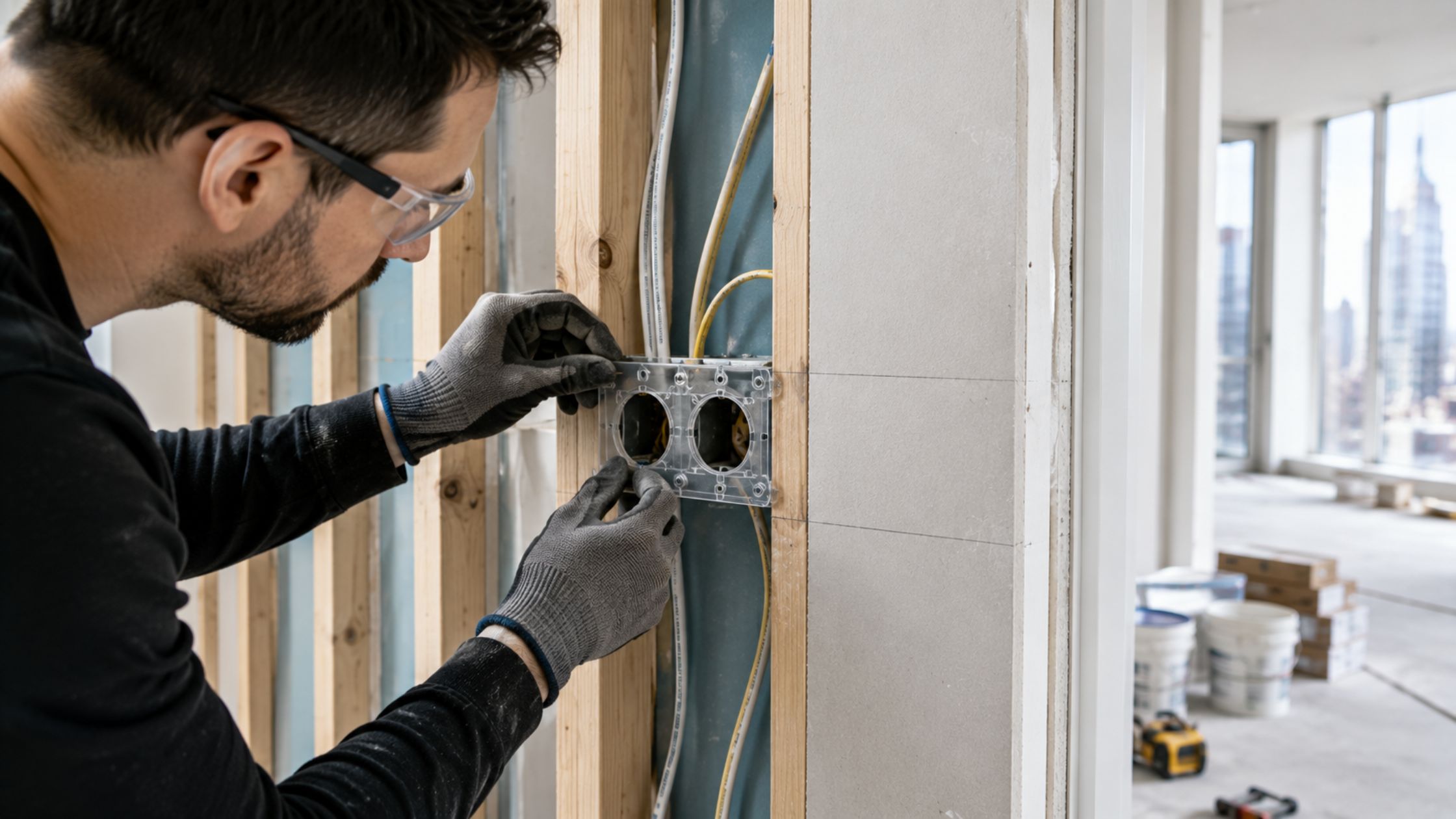
Structural Prep and Plastering Tolerances for Bocci 22
The Auxiliary Junction Box Setup
Many Bocci 22 installations require a strategic auxiliary or “double-box” layout to maintain accessibility for electrical connections while preserving the desired finish appearance. The terminal barrel of the Bocci device cannot simply contain standard wire splices if those splices become unreachable after plastering.
We solve this structural hurdle by routing the primary line-voltage conductors into a code-approved, accessible auxiliary junction box hidden within nearby non-structural spaces, such as the interior of a custom closet, behind a removable panel in a baseboard, or inside an adjacent utility mechanical room. From this accessible location, we run dedicated loops to the concealed Bocci barrel. This layout ensures that any future circuit testing or wire replacement can be executed at the auxiliary box, supporting compliance with accessibility and inspection requirements.

Mud-In and Sanding Rigor: Achieving a Flat Level 5 Finish
The physical installation of the Bocci component is an uncompromising process that leaves no margin for error. The system relies on a proprietary polycarbonate mounting plate that must be mounted securely to the framing studs and set to an exact depth relative to the future plaster line.
The following comparative table outlines the execution variables of premium flush-mount hardware systems:
| Hardware System | Invisibility Rating | Finishing Labor Required | Cost Category | NYC Code Complexity |
|---|---|---|---|---|
| Bocci 22 Series | Exceptional | High (Three independent plastering rounds) | Premium ($$$) | High (May require additional accessibility planning depending on installation configuration) |
| Trufig System | Exceptional | Moderate (Single-coat integrated gypsum panel) | Ultra-Premium ($$$$) | Moderate (Requires proprietary pre-con backbox) |
| SeeLess Solutions | High | Moderate (Standard plaster skimcoat overlay) | Accessible ($$) | Low (Fits standard certified utility boxes) |
To prevent the joint compound from cracking around the outlet barrel due to natural building vibration or the physical force of plugging in appliances, we execute a rigorous plastering protocol.
Our finishers completely avoid standard evaporative joint compounds for the foundational coats, as their high shrinkage rates create internal voids. Instead, we pack the mounting plate reveal with a chemically curing setting-type joint compound (hot mud) reinforced with alkali-resistant fiberglass mesh tape. We apply three independent rounds of mudding and executing fine detail sanding under critical 5000K LED lighting to deliver a monolithic, crack-free Level 5 finish.
The Partner Approach: Seamless Designer-Contractor Alignment
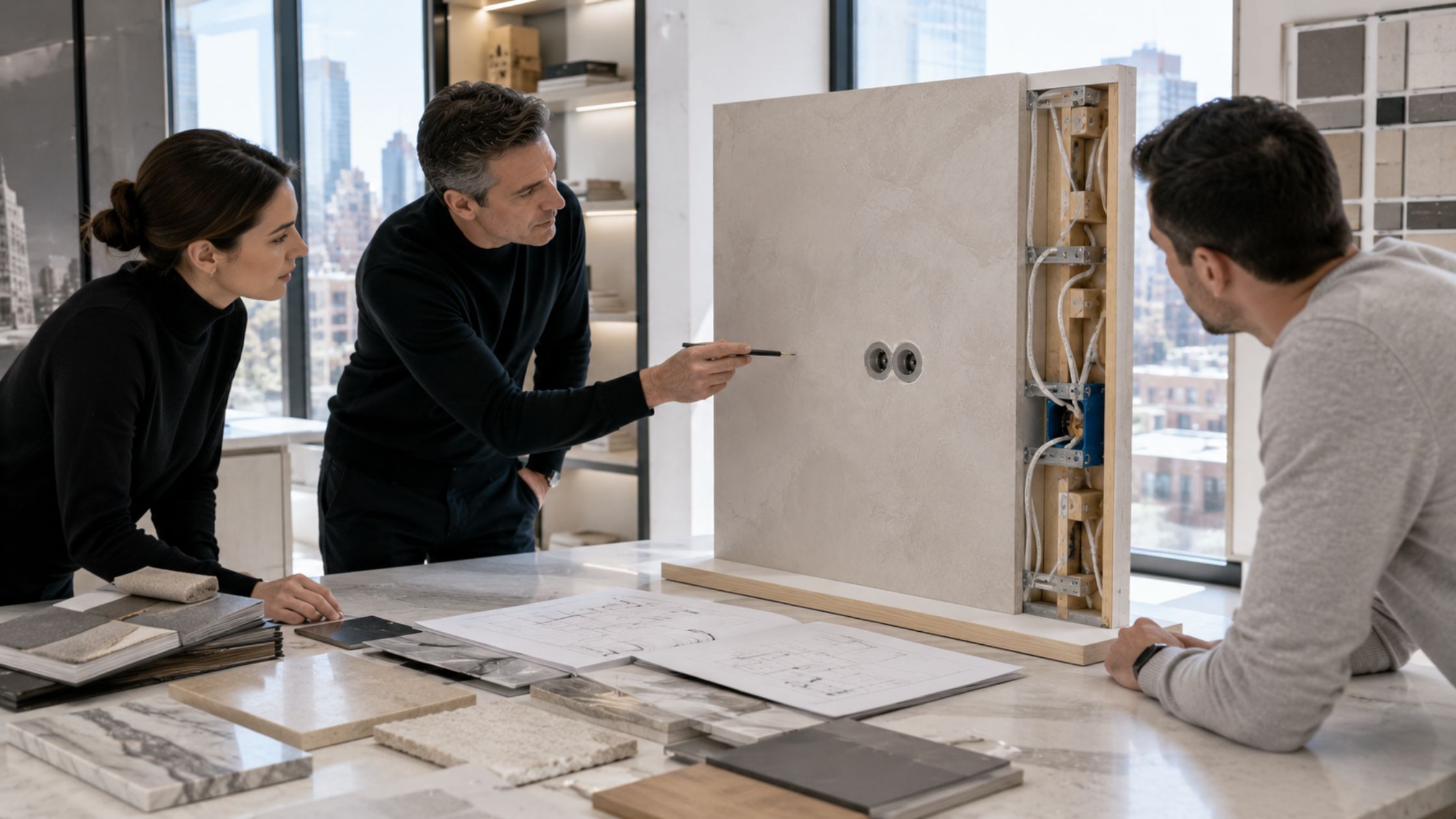
The Pre-Con Mockup Protocol
At Meraki Remodeling, we view ourselves not merely as a builder, but as the technical executor of design intent. We know that high-precision minimalist detailing cannot be left to chance or field improvisation.
We reduce constructability risk by mandating on-site, physical mockups of trimless electrical assemblies during pre-construction to validate structural depth, trim alignment, and plaster finish tolerances before scaling execution across the floor plate. This process allows the interior designer and the mechanical sub-trades to evaluate the precise depth of the electrical boxes, verify alignment, and sign off on the plaster finish texture before full deployment.
Typical Cost Considerations for Flush Electrical Systems (2026)
| Scope | Typical 2026 Cost Consideration |
|---|---|
| Bocci 22 Hardware | Premium product with specialized mounting components and coordinated electrical rough-in. |
| Trufig Systems | Ultra-premium system requiring proprietary backboxes and early trade coordination. |
| Flush Plaster Finishing | Additional labor for multiple plaster coats, curing, sanding, and finish verification. |
| Mockups & Field Coordination | Additional pre-construction effort to verify box depth, finish tolerances, and installation sequencing. |
| Specialty Electrical Coordination | Increased coordination among electrical, framing, drywall, and finish trades to maintain code compliance and design intent. |
Note: Typical 2026 considerations for high-end residential and commercial interior projects in NYC. Actual costs vary based on project scope, finish materials, building conditions, and manufacturer specifications.
White-Glove Site Protection
Bocci 22 installations frequently occur alongside rare wood veneers, custom millwork, and delicate hand-applied wall plasters. Our operational methodology prioritizes a comprehensive site-protection program.
We isolate active work zones using negative-pressure HEPA filtration arrays to manage micro-dust during the detail-sanding phases. We wrap and shield adjacent finishes with non-marring, vapor-permeable protective layers, ensuring that the custom craftsmanship of your design remains pristine from initial rough-in to the final closeout inspection. We handle the technical complexities of local codes and multi-trade scheduling, ensuring your creative vision is delivered with disciplined coordination and attention to code compliance.
Protect Your Minimalist Vision
Executing high-precision trimless detailing within the strict framework of NYC building codes requires an execution partner who treats electrical engineering and material science with absolute precision.
Are you specifying a premium trimless wiring system for an upcoming luxury interior and need an expert technical partner to de-risk the installation sequence?
Talk to the Meraki Team About Your Detailing Strategy
Frequently Asked Questions About Bocci 22 Outlet Installation in NYC
Q1: Does a Bocci 22 outlet comply with NYC electrical code?
A1: Yes, Bocci 22 systems can comply with NYC electrical code requirements when electrical connections remain accessible for inspection, maintenance, and future servicing. Compliance depends on the installation method, wiring configuration, and coordination with the electrical contractor and design team.
Q2: Why do some Bocci 22 installations require an auxiliary junction box?
A2: An auxiliary junction box may be used when electrical splices or terminations cannot remain accessible within the finished Bocci assembly. This approach allows maintenance access while preserving the desired flush architectural appearance.
Q3: Does a Bocci 22 outlet require a Level 5 finish?
A3: While not a code requirement, a Level 5 finish is often recommended for Bocci 22 installations because the trimless profile makes minor surface imperfections more visible under natural and artificial lighting conditions.
Q4: What is the biggest construction challenge when installing a Bocci 22 system?
A4: The most significant challenge is coordinating electrical rough-in, wall framing, substrate preparation, and finish tolerances across multiple trades. Successful installations depend on early mockups, dimensional verification, and detailed pre-construction planning.
Q5: Can Bocci 22 outlets be installed in plaster, millwork, or stone surfaces?
A5: Yes. Bocci 22 systems are commonly integrated into plaster, millwork, stone, and other high-end finish materials. Each substrate requires careful coordination of mounting depth, finish thickness, and access requirements to maintain both aesthetics and code compliance.

