


For architects and design professionals, the NYC Department of Buildings (DOB) filing strategy defines the project’s critical path. In practice, the key threshold is whether the scope of work will require a new or amended Certificate of Occupancy (CO). If it does, the filing moves into Alteration-CO / Alt-1 territory. If it does not, the work is typically handled as an Alt-2 or other renovation filing, depending on scope and work type.
Alt-1 vs Alt-2 NYC renovation decisions depend on whether the scope triggers a new or amended Certificate of Occupancy, which determines the level of DOB review and inspection requirements.
DOB NOW streamlines filing workflows, but it does not eliminate technical risk. If the team misclassifies the job or underestimates the requirements tied to a new CO, the project can stall for months. This guide breaks down the triggers, the risks, and the execution logic architects need to evaluate Alt-1 vs. Alt-2 correctly.
Relevant DOB references:
– NYC DOB Certificate of Occupancy
1. Alt-1 (Alteration-CO): The Major Threshold
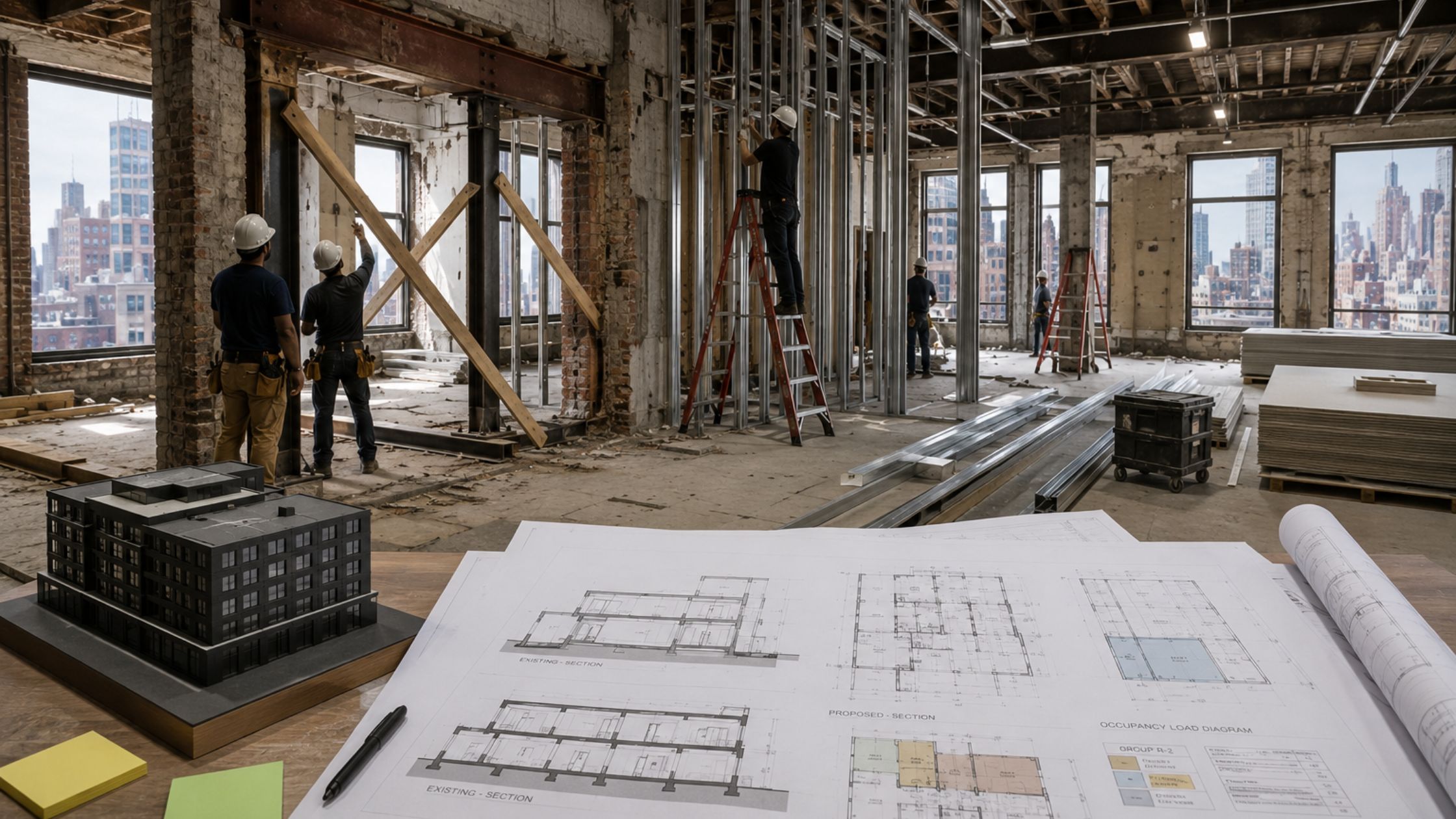
An Alt-1 filing (Alteration-CO / Major Alteration) is required when the work results in a new or amended Certificate of Occupancy. This is the most complex alteration pathway and requires full DOB review. Depending on the scope and location, the filing may also require sign-offs or approvals from other agencies, including LPC, FDNY, or DOT.
Triggers for an Alt-1 (Alt-CO) Filing:
- Change of Use: Transitioning a space from commercial (Group B) to residential (Group R), or vice versa.
- Change in Occupancy Load: Significant changes to the number of people legally permitted in a space, which can be triggered by conversion projects, assembly reconfigurations, or major program changes.
- Change in Unit Count: Converting a single-family brownstone into a multi-unit dwelling, or consolidating units.
- Egress Reconfiguration: Any change that alters the building’s legal egress path, including new fire stairs or major corridor shifts.
2. Alt-2 (Standard Alteration): The Execution Scope
An Alt-2 filing is the standard pathway for many renovation scopes that do not change the Certificate of Occupancy. It can cover multiple work types, including plumbing, mechanical, structural, and general construction, provided the work does not trigger a new or amended CO.
Although an Alt-2 is generally faster to approve than an Alt-1, the execution risk remains high. In dense high-rise environments, an Alt-2 still demands rigorous coordination of work types, inspections, co-op restrictions, and site logistics.
Many Alt-2 filings in co-op and condo buildings must also align with the building’s Alteration Agreement requirements. See our guide to NYC co-op alteration agreements.

3. The Architect’s Decision Tree: When a Project Triggers Alt-1 vs. Alt-2
| If the project involves... | Filing Category | Key Requirement |
|---|---|---|
| Changing unit count (e.g., 2-family to 1-family) | Alt-1 | New Certificate of Occupancy |
| Adding an interior partition or kitchen island (without changing CO, egress, use, or occupancy classification) | Alt-2 | Letter of Completion |
| Converting retail space into a luxury residence | Alt-1 | Egress, accessibility, and life-safety review |
| Upgrading HVAC and MEP systems | Alt-2 | Work Type Approvals (Mechanical/Plumbing - MCH/PL) |
| Relocating a legal fire stair | Alt-1 | FDNY Review + New CO |
4. Execution Risk: Why the GC Choice Matters
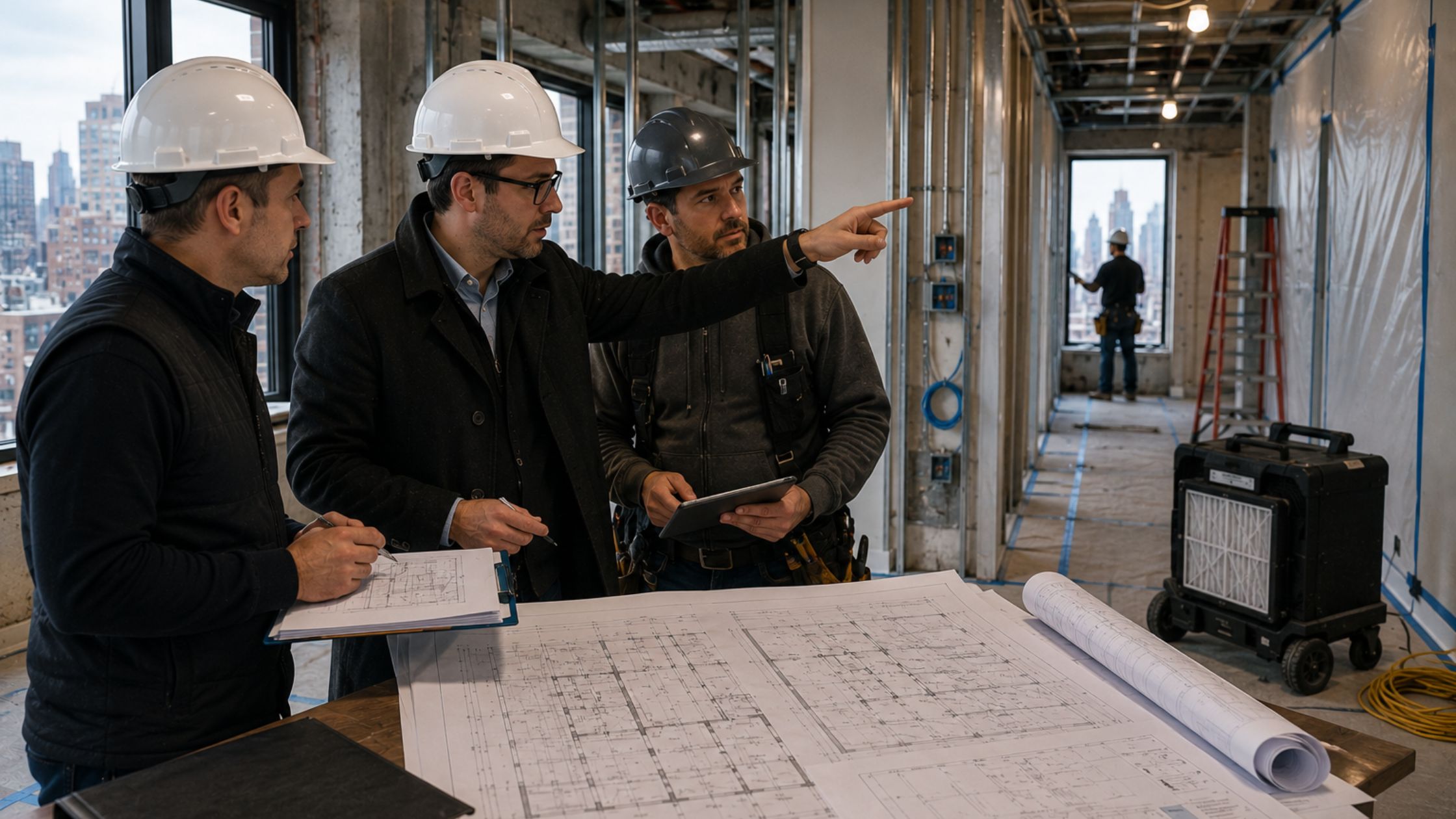
The risk profile of an Alt-1 is materially higher than an Alt-2 due to its direct impact on legal occupancy and regulatory sign-off. Because an Alt-1 ends with inspections and sign-offs tied to a new or amended CO, DOB scrutiny is far more intensive. Every field workaround or uncoordinated MEP penetration can trigger objections, inspection failures, or additional amendments, leaving the owner without legal occupancy until the filing is resolved.
At Meraki Remodeling, we specialize in the Execution of Design Intent for these high-complexity filings. We act as your technical partner by:
- Validating Constructability: We review Alt-1 drawings for “buildability” before filing, identifying potential field conflicts that would trigger a Post-Approval Amendment (PAA).
- Managing the Inspection Loop: We coordinate the sequencing of progress inspections (TR-1s, TR-8s) to ensure the documentation matches the field conditions on day one.
- Risk-Proofing the CO: We understand that an Alt-1 does not end when construction ends. It ends when the team secures the required inspections, sign-offs, and the updated CO or TCO. We manage that final regulatory punch list with the same precision we apply to field execution.
5. What About Alt-3? Minor Alterations in DOB NOW
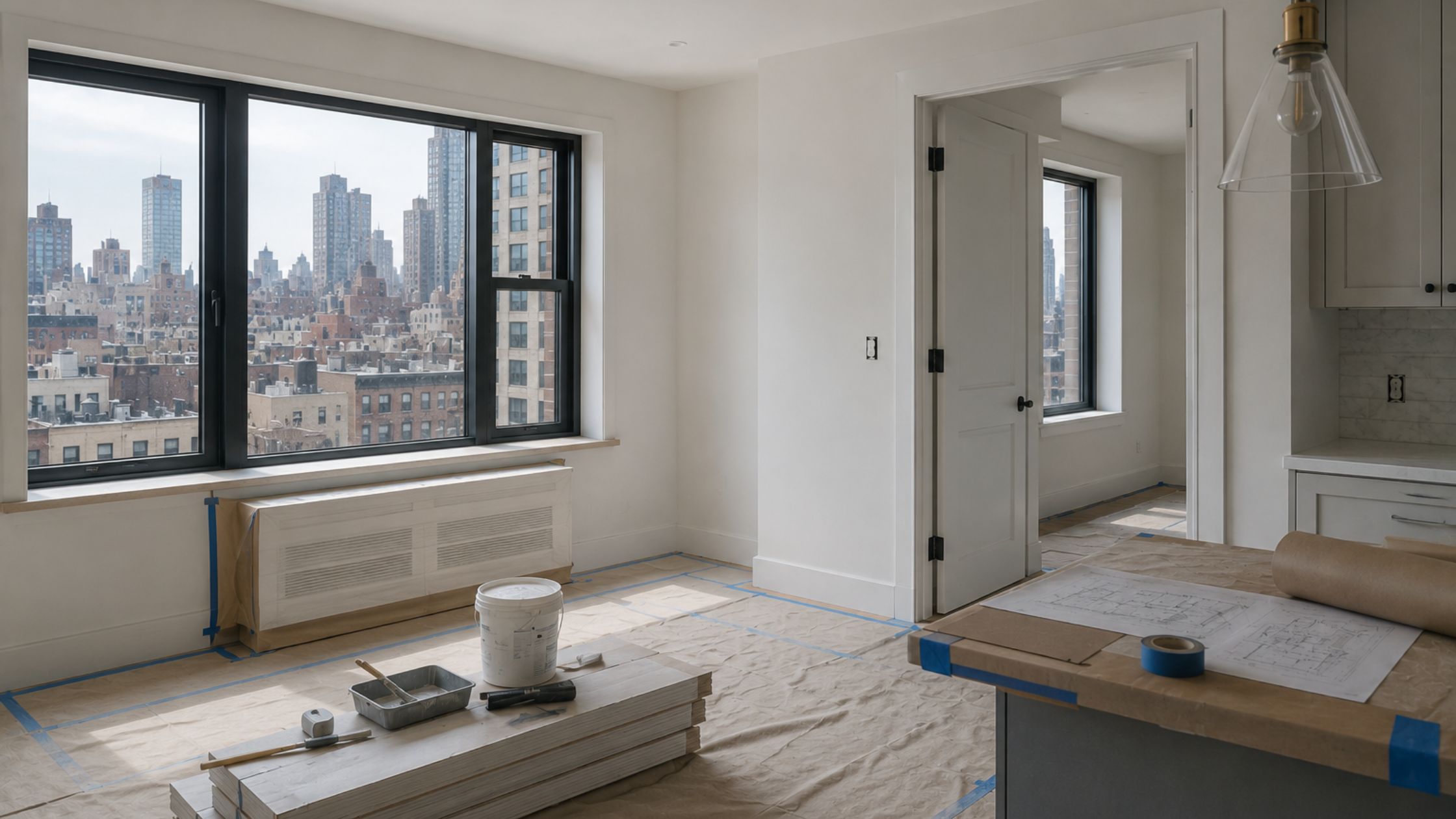
Alt-3 filings apply to limited-scope minor alterations that do not affect use, egress, occupancy, or major building systems. These filings are generally reserved for cosmetic or low-impact work that does not require extensive progress inspections or full licensed design professional coordination.
Examples may include:
- Minor non-structural interior work
- Limited finish replacements
- Small layout adjustments without major MEP modifications
Under DOB NOW, many filing workflows that historically fell under Alt-3 are now submitted through more specific work-type pathways or incorporated into Alt-2 filings. For architect-led renovations involving multiple trades, MEP coordination, or occupancy implications, Alt-3 is rarely the appropriate filing strategy.
Next Step for Your Project
Navigating the DOB’s alteration thresholds requires more than a filing representative; it requires an execution partner who understands the high stakes of a Certificate of Occupancy.
Are you vetting a project that may trigger a new CO and need a technical partner to discuss the execution logistics of an Alt-1?
Talk to the Meraki Team About Your Project Filing
Architect-Facing FAQ: NYC Alteration Types
Q1: Does a “Full Gut Renovation” always require an Alt-1?
A1: Not necessarily. If you are stripping a luxury apartment to the studs while maintaining the existing unit count, egress, use, and occupancy classification, an Alt-2 is typically sufficient.
Q2: What is an Alt-3, and is it still relevant?
A2: Alt-3 is a DOB filing type typically used for minor work that does not change occupancy, egress, or use, and does not involve significant structural scope. It can still be relevant for small, clearly bounded scopes (think limited trades, low coordination risk, and no CO implications). For most architect-led renovations that touch multiple disciplines (architectural + MEP, reconfiguration, or any scope that increases coordination and inspection complexity), teams usually file Alt-2 with the appropriate work types and supporting documents. The practical takeaway: if your scope requires coordinated drawings and trade sequencing, assume Alt-2 unless your expeditor confirms the job truly qualifies as a minor Alt-3.
Q3: Can we begin work while a Certificate of Occupancy is being amended?
A3: Construction may begin once DOB issues the permit, but legal occupancy depends on the applicable Temporary Certificate of Occupancy (TCO) or final Certificate of Occupancy. Teams should not assume they can occupy or sign off the project fully until DOB completes the required occupancy approvals.
Q4: How does the “City of Yes” impact Alt-1 vs Alt-2 decisions?
A4: City of Yes changes zoning rules that can make more conversion projects feasible, including office-to-residential work. When a project changes legal use, occupancy, egress, or requires a new or amended CO, it typically moves into Alt-1 / Alteration-CO territory.

