


In the high-stakes environment of New York City luxury architecture, a recurring operational issue affects project continuity: the rapid turnover of project managers at legacy, mega-contracting firms. Architects spend months, sometimes years, collaborating with a client to perfect a design set. Yet, when the project moves to the field, the institutional knowledge embedded within those drawings is often diluted through multiple project handoffs.
The corporate structure of a mega-firm relies on a fragmented chain of custody. The senior executives who pitch the project and win the bid rarely set foot on the active construction floor. Instead, they hand the project off to a mid-level project manager, who then hands it off to a junior coordinator. In a job market defined by high professional volatility, that project manager often exits the firm mid-build.
When a new manager steps onto an active site without direct continuity from the earlier design development phase, execution stalls. The result is a sudden spike in reactive Requests for Information (RFIs), uncoordinated trade routing, and misalignment between the approved design intent and field execution.
To break this cycle, premier design firms are bypassing corporate scale in favor of a principal-led boutique general contractor in NYC. This alternative model ensures that the leadership who estimates, plans, and synthesizes the project is the exact same team that guides the field crews to the final sign-off.
Relevant standards and references:
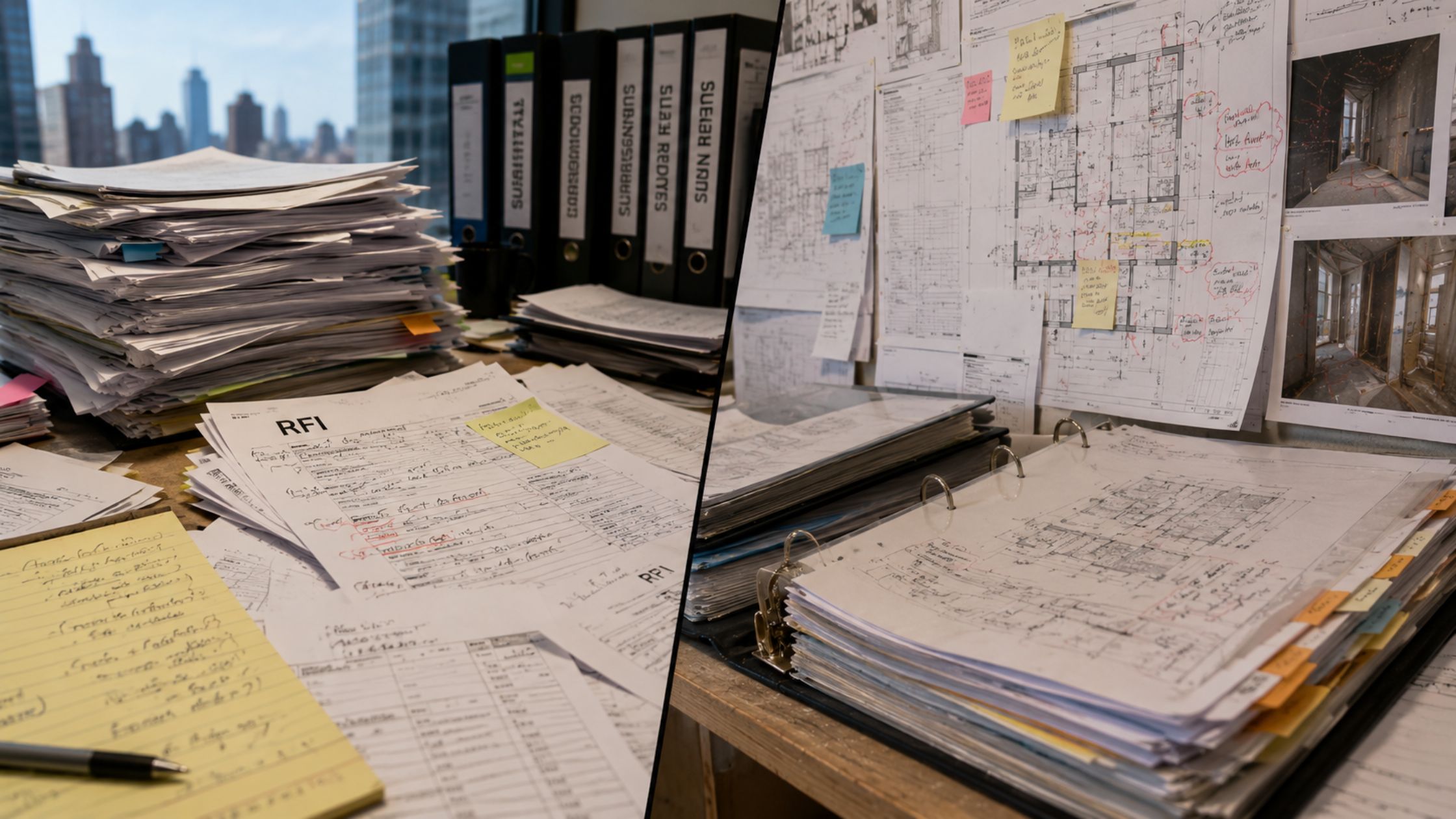
1. The Creative Tax of the Mega-Firm Shuffle
The mega-firm operational model often treats construction as a volume-driven production workflow. This corporate division of labor strips the nuance out of high-end custom architecture. When a project moves through a mega-firm, it undergoes a series of discontinuous handoffs:
Every single arrow in this diagram represents a critical point of information failure. The estimating department does not understand why the architect specified a particular continuous, trimless baseboard reveal. The junior project manager assigned to the account does not realize that a specific plumbing stack cannot be shifted without violating a co-op’s wet-over-dry rules.
When that project manager leaves the company six months into a gut renovation, the replacement manager inherits a mountain of unread emails and a paper trail of uncoordinated field revisions. The architect must then step in to re-educate the contractor’s staff, effectively acting as an unpaid construction manager just to protect the integrity of their own design set.
2. The Principal-Led Paradigm: Leadership Continuity Through Construction
A principal-led boutique general contractor in NYC maintains consistent leadership involvement from pre-construction through closeout, reducing coordination gaps caused by internal project handoffs.
This construction model minimizes information loss by maintaining a flat, highly accountable leadership structure. In this boutique approach, a founding partner or senior principal retains direct oversight of the project from the initial constructability review through final punch-list coordination.
This model offers significant technical advantages for complex urban footprints:
- Immediate Decision Architecture: When a structural anomaly appears behind a pre-war plaster wall, a principal-led team can evaluate and coordinate field solutions without extended internal approval delays. Because the decision-maker possesses full autonomy and intimate knowledge of the budget, they bypass the corporate approval loops that leave projects idling for weeks.
- Sustained Subcontractor Leverage: High-end boutique GCs maintain deeply vetted, long-term relationships with artisan sub-trades—including Master Plasterers, stone fabricators, and custom millworkers. Subcontractors answer directly to the principal, ensuring a level of field quality and schedule adherence that rotating corporate managers cannot command.
- Design Protection as a Core Metric: A principal-led builder views an architectural detail not as a line item to be value-engineered into a cheaper alternative, but as a critical component of the approved design intent.
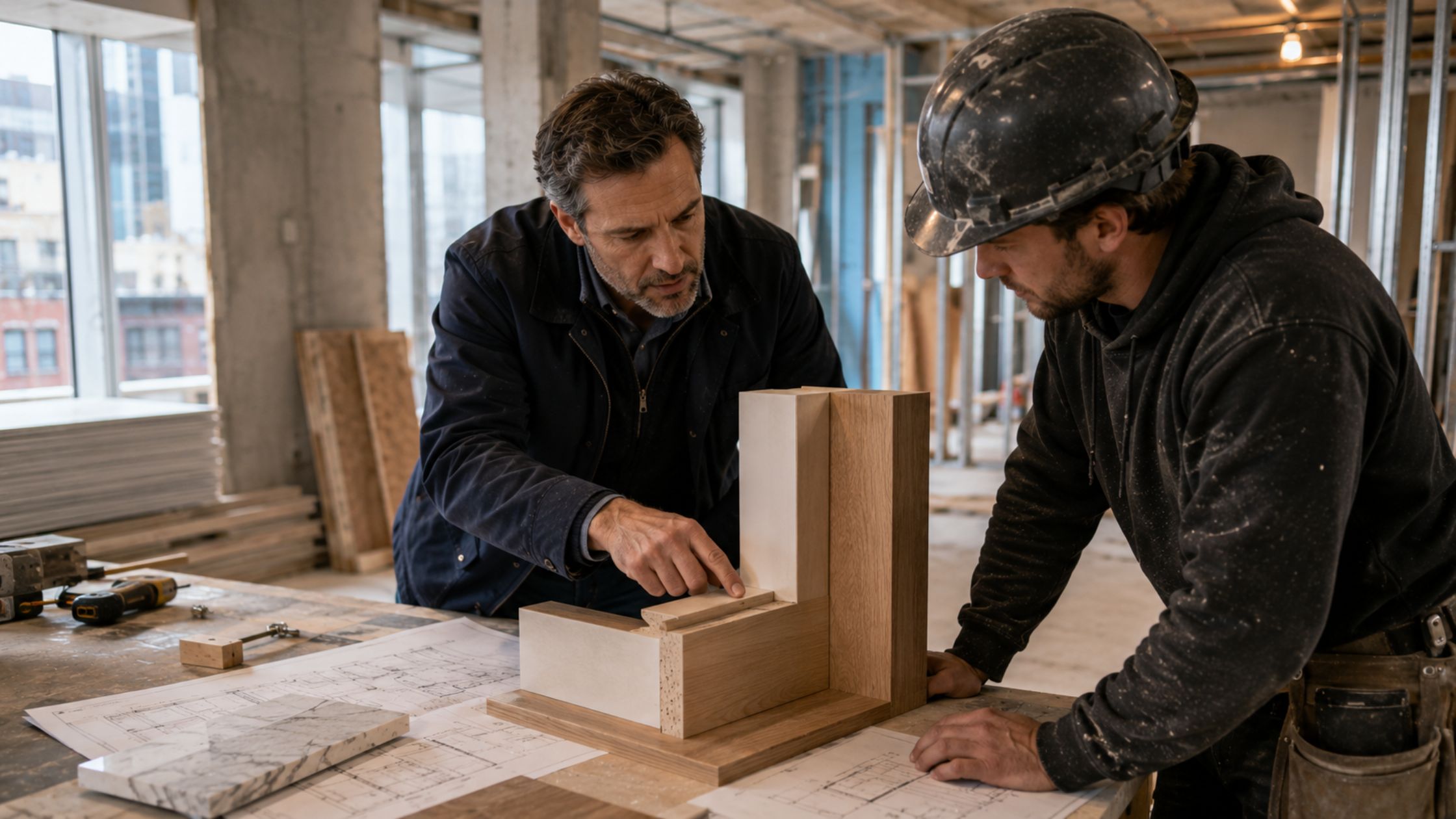
3. Technical Matrix: Leadership Continuity vs. Corporate Attrition
| Operational Vector | Legacy Mega-Firm Model (High Attrition Risk) | Principal-Led Boutique Approach (Coordinated Continuity) |
|---|---|---|
| Point of Contact | Rotating mid-level project managers and coordinators. | Dedicated founding partner or senior firm principal. |
| Pre-Con Integration | Handled by a separate estimating division; details are easily lost. | Conducted directly by the executing principal team. |
| RFI Resolution | Reactive; filtered through an administrative chain of custody. | Proactive; handled via direct peer-to-peer architect communication. |
| Knowledge Handoffs | Multiple internal handovers; high risk of information loss. | Reduced internal handoffs with continuous leadership oversight from bid through completion. |
| Subcontractor Accountability | Managed via generic corporate purchase orders. | Guided by long-standing, principal-to-principal relationships. |
4. Operationalizing the Boutique Model inside the CDE
A common misconception among developers is that boutique firms lack the technological infrastructure of their international competitors. In reality, a modern, principal-led general contractor operates with a higher level of digital precision because their systems are unified, not siloed.
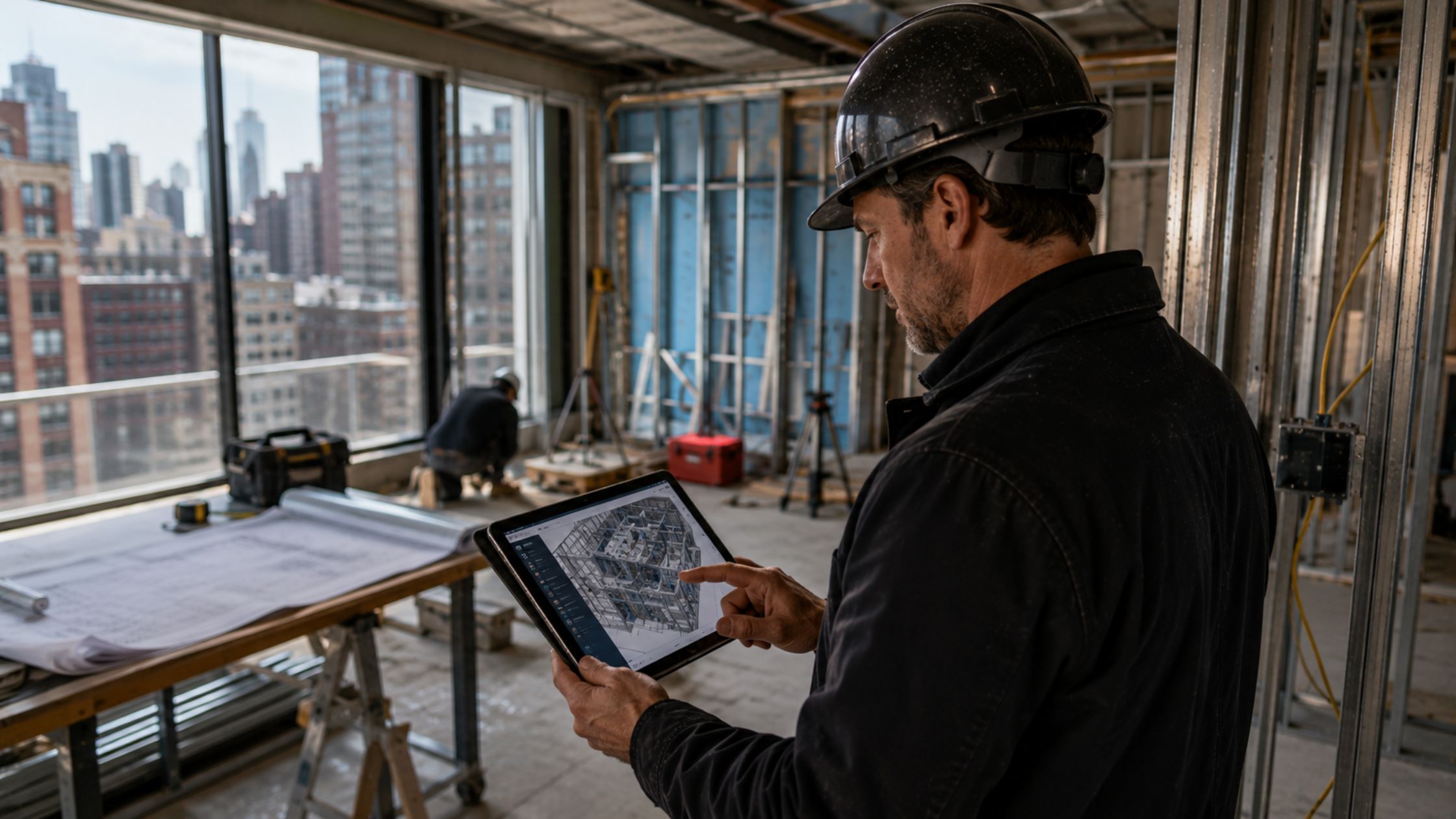
At Meraki Remodeling, we anchor our entire management lifecycle within a single, cloud-based Common Data Environment (CDE). Because our principals actively manage the project data, our sequencing workflows and reality-capture LiDAR documentation remain directly integrated into active project coordination.
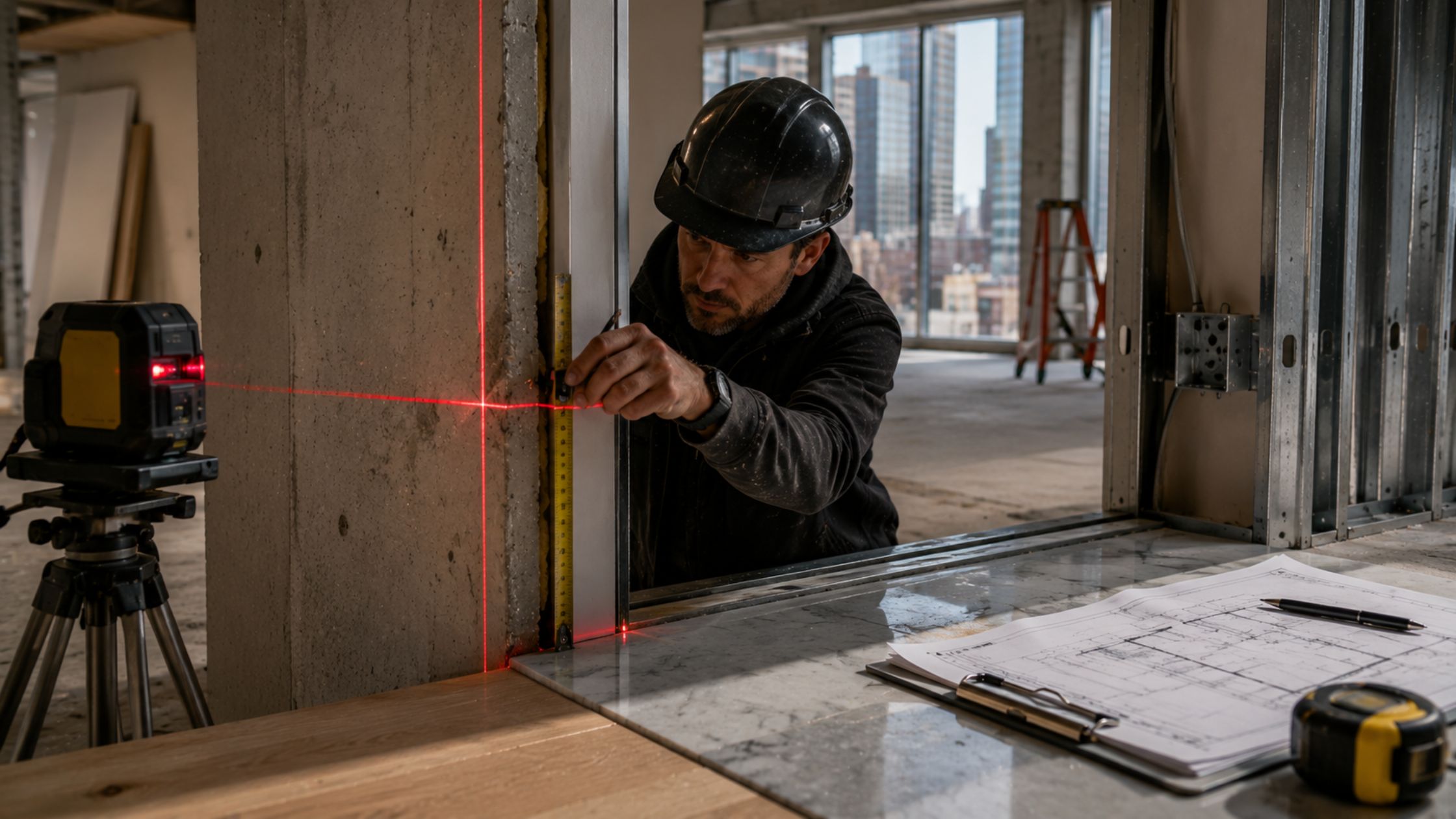
When we execute a change or approve a shop drawing, that metadata propagates directly to our field supervisors without passing through a multi-tiered corporate bureaucracy. The senior leadership team that sits in the initial design meeting is the same team checking the mill thickness of a fluid-applied traffic membrane on-site or verifying the alignment of a concealed pocket door header. This flat operational structure improves communication transparency and strengthens scheduling coordination throughout construction.
Execution of Design Intent: Peer-to-Peer Partnership
At Meraki, we view ourselves not merely as a builder, but as the technical executor of design intent. We recognize that high-performance architecture demands an equivalent level of management continuity. Your creative vision should never be compromised by an internal corporate shakeup or the sudden resignation of an uninvested project manager.
By operating as a deliberate, principal-led boutique builder, we offer architects a true peer-to-peer partnership. We take on the full logistical weight of NYC’s strict high-rise constraints, co-op board alteration guidelines, and complex trade routing. Our principals handle the engineering details, the supply chain guardrails, and the field sequencing through disciplined field coordination and sequencing, leaving your team completely free to design the future of the city’s built environment.
Protect Your Project Velocity
Executing an uncompromised architectural design requires a general contractor who treats leadership continuity as a strict project specification.
Are you advancing a sophisticated, high-stakes NYC project and need a technical execution partner who maintains leadership continuity from pre-construction through closeout?
Talk to the Meraki Team About Your Next Project Set
Architect-Facing FAQ: Boutique Model Scale and Capacity
Q1: Can a boutique principal-led firm effectively handle large-scale, multi-million dollar gut renovations?
A1: Yes. A boutique designation refers to a firm’s operational philosophy and flat leadership structure, not a limitation on capital capacity or project scale. By focusing on a highly curated portfolio of active projects, our principals allocate maximum technical attention to each build, deploying extensive financial resources and top-tier sub-trade networks with total efficiency.
Q2: How does a principal-led structure affect the speed of the submittal review loop?
A2: It shortens the timeline significantly. Because the principal who reviews the shop drawings inside the CDE is already completely aligned with your design intent from the pre-construction phase, they can pre-validate dimensions, mechanical clearances, and material specifications. This eliminates the standard back-and-forth, improving submittal coordination and reducing revision cycles during review.
Q3: What happens to a principal-led project if the lead partner faces an unexpected emergency?
A3: Our boutique structure features redundant leadership layers. Unlike a mega-firm where projects are isolated among independent managers, our principals maintain cross-functional visibility across our entire active portfolio. If an emergency occurs, another firm principal steps in with immediate, comprehensive access to the cloud-based CDE, helping maintain project continuity and minimizing disruption to active field operations.
Q4: Are principal-led boutique GCs more expensive than traditional corporate contractors?
A4: Our fee structures are highly competitive because we eliminate the massive corporate overhead, non-essential administrative layers, and extensive marketing divisions that define mega-firms. The financial value of the principal-led model is realized in the field through reduced coordination conflicts, improved project continuity, and tighter alignment between design intent and field execution.

